The problem
Finding a good run still runs on group chats and luck.
Pickup apps have mapped tens of thousands of courts. None of them can reliably tell you if anyone's actually playing.
The approach
Build the culture, not another map.
Live check-ins, a digital "next" that respects court etiquette, and a visual identity for every court in the city.
The outcome
A brand players would actually wear.
A full identity system, four core screens, and shareable recap cards built for Instagram stories.
01 — Problem space
Everybody built a map.
Nobody built the run.
Basketball is one of America's most-played sports, and pickup is how most adults play it. But finding a good game still depends on knowing the right people, checking the right group chat, or driving to a court and hoping.
26M+
Americans play basketball — the most-played team sport in the US by participation.
Sports & Fitness Industry Association (SFIA)
60K+
courts in the biggest pickup directories — yet players still complain local listings have no reviews or activity.
Fullcourt, Courts of the World app listings, 2026
24.3M
US pickleball players in 2025, up 479% in five years — and competing for the same public courts.
SFIA 2026 Pickleball Report
Problem statement
Chicago pickup players need to know where a good run is happening right now, because a wasted trip to an empty court is the reason people stop playing.
02 — Research
From the app store to the blacktop.
A
Competitive audit
Eight pickup apps including Fullcourt, Courts of the World, HoopQueue, InfiniteHoops and Claim Your Court. I scored each on live accuracy, community, and personality.
B
Court scouting
Mapped Chicago's best-known runs — Foster Beach, Jackson Park, Benito Juárez in Pilsen, Horner Park — and how locals describe each one's level, crowd and best times.
C
Review mining
Read app-store listings and public reviews to find where these apps let players down — stale data, empty listings, no community.
D
Culture scan
Hoops creators, streetball accounts and local run pages — how players already talk about, film and share their games.
Audit takeaway
They all look like utilities. Pickup is a culture.
Almost every app led with a map and a court count. Few had live data people trusted, and none had a personality you'd want to rep.
Live accuracy
Mostly self-reported, often stale
Calling next
Almost never supported
Court identity
Every court is a generic pin
Shareability
Nothing worth posting
What I learned
1 · "Is it running?" is the whole product.
Players don't need a list of courts — they know the courts. They need to know which one has a good game in the next 30 minutes.
2 · Next is sacred.
Calling next is an in-person ritual. An app that lets someone claim next from their couch would get hated on day one.
3 · Every court has a personality.
The lakefront sunset run and the mural courts in Pilsen feel nothing alike. Apps flatten them into identical pins.
4 · Who's there matters as much as where.
Players pick runs by level and vibe. "Competitive but friendly" and "old heads only" are real decision factors.
5 · Players already share their runs.
Highlights, game-winners, court sunsets — the posting is already happening. The app should give people something worth sharing.
03 — Who it's for
The after-work regular.
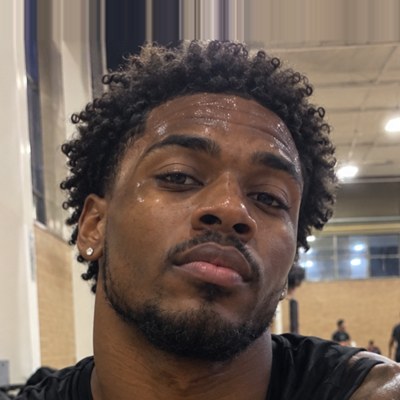
Dre, 27
Logistics analyst · Bronzeville · proto-persona
"I'll drive 20 minutes for a good run. I won't drive 20 minutes to shoot by myself."
Plays
3× a week after work, rotating between three courts depending on who's out.
Frustrations
Empty courts · runs that are too sloppy or too serious · group chats that go quiet
Proto-persona built from secondary research. Next step: validate with players on the sideline.
Dre's Tuesday, today
5:30 PM
Off work. Texts three group chats.
5:50 PM
One "maybe." Guesses Jackson Park.
6:15 PM
Two guys shooting. No run.
6:40 PM
Drives to another court. Waits 3 games.
7:30 PM
Finally plays. Great run — but half the night is gone.
Opportunities:
See who's out before leaving Know the wait Match the level04 — Principles
House rules.
01
Respect the run.
Digital never overrides court etiquette. You call next where you'd call it — at the court.
02
Live or it's lying.
Every status shows how fresh it is. Old info fades out instead of pretending.
03
Every court gets a jersey.
Courts are teams with their own colors, number and badge — not pins.
04
Loud, not cluttered.
Big type and bold color — but one job per screen, readable on a sunny court.
05
Built to be posted.
If a screen ends up in someone's story, the brand did its job.
05 — Brand exploration
Three directions. One felt like Chicago.
A · Hardwood Classic
CUTRetro varsity script, navy and gold. Nostalgic and warm — but it said "rec league," not "the best run in the city."
B · Clean Sport
CUTMinimal, soft blue, lots of white. Easy to use — and indistinguishable from every fitness app on the home screen.
C · Blacktop
CHOSENAsphalt, chalk, ball orange, and the six-point star from the Chicago flag. Condensed type that hits like a jersey number.
Why the star
The Chicago flag's six-point star is everywhere in the city — tattoos, murals, merch. It gives NEXT instant local pride without borrowing any team's marks.
Why condensed type
Anton reads like a jersey number and stays legible at a glance on a bright court. Archivo handles everything else with a little grit.
The court jersey system
Each court gets a number, two colors and a badge drawn from its neighborhood. Runs feel like home games, and players rep their court.
06 — Core flow
Couch to court in five moves.
1
Check what's running
Live feed of courts with games on, sorted by distance and level.
2
Scout the court
Who's out, the wait, the level, and how fresh the info is.
3
Check in on arrival
Location confirms you're actually at the court.
4
Call next
Join the line, build your five, get pinged when you're up.
5
Post the run
A recap card in your court's colors, ready for your story.
07 — Final designs
Built for the blacktop.
High contrast for sunny courts, oversized tap targets for sweaty thumbs, and type you can read from arm's length.
01 · Runs near you
Running now, not "courts nearby."
The home feed only shows courts with games on. Each card leads with players out and the wait, then level and freshness.
02 · Court page
Scout before you drive.
Foster Beach wears its jersey: number, colors, badge. The live board shows who's on, who's waiting, and the run's vibe from regulars.
03 · You got next
The line, made visible.
Only unlocks once you're at the court. Build your five, see your spot, and get a buzz when the game before yours hits game point.
04 · Run recap
Something worth posting.
After the run, a poster-style card in your court's colors — games, wins, streak — sized for an Instagram story.
08 — Iteration
What changed between versions.
Call next from anywhere
→ Only at the court
Remote queueing broke the most important unwritten rule in pickup. Location check-in keeps the digital line as fair as the real one.
Star ratings for players
→ Run vibe from regulars
Rating people invites beef. Rating the run — level, pace, how friendly it is — gives the same signal without the toxicity.
Map-first home screen
→ "Running now" feed
A map of every court buried the answer. Leading with active runs turned the main question into a two-second glance. The map moved one tap away.
09 — Validation
Testing it where it lives.
Guerrilla tests on the sidelines at busy courts: hand players the prototype between games and give them three tasks. Plus a five-second brand test with hoopers vs. non-hoopers. This is the plan for the next phase — the numbers below are the targets I'd hold the design to.
< 10s
to find a running court nearby (target)
3 taps
to call next once checked in (target)
"Basketball"
top word in a 5-second brand test (target)
Shares
recap cards posted per active player (metric to track)
10 — Reflection
Design the culture, not just the app.
The biggest calls in this project weren't visual — they were about what not to digitize. Calling next stays at the court. Nobody gets a star rating. The brand's job was to make the app feel like it belongs on the blacktop, and the product's job was to stay out of the game's way.
What's next
Winter mode — indoor open gyms and rec centers when Chicago courts freeze over.
Court merch — print-on-demand tees and hats in each court's jersey colors.
Shared courts — schedules that help hoopers and pickleball players split public courts fairly.